

Planning a Family Trip to Ireland? Here’s How to Make it Work for Every Generation.

Ireland’s landscape seems to offer so many diverse itineraries.
Maybe you’re gathering relatives from different parts of the United States. Maybe you’re meeting Irish family you’ve only heard about in stories. Maybe someone has decided it’s finally time to visit the county your grandparents or great-grandparents came from.
Or maybe you simply want to get the whole family together somewhere more memorable than somebody’s backyard.
Whatever brings you there, an Ireland family vacation can be incredible.
It can also get complicated very quickly.
Grandparents may want history and genealogy. Parents want everyone to have a good time. Teenagers need something besides another scenic overlook. Little kids have their own schedules. Someone wants to golf. Someone wants to shop. Someone else has already located the nearest pub.
And then there is always that one family member who has created a spreadsheet containing 14 attractions per day.
Do not give that person the car keys.
The secret to a wonderful multigenerational trip to Ireland isn’t finding an itinerary everyone will love equally.
It’s creating a trip with enough flexibility that everyone can enjoy Ireland in their own way—and still have plenty of time together.
Here are some of the things I’d consider when planning one.
1. Choose a Home Base Instead of Moving Every Night
This is probably the biggest thing I’d recommend. When you’re traveling with a large or multigenerational group, changing accommodations constantly adds another layer of work.
Every move means: packing everyone’s luggage, checking rooms, loading cars, coordinating departure times, driving, finding the next accommodation, unloading everything and starting over. And inevitably somebody leaves a charger behind. For our own family trip through Cork and Tipperary, we chose Midleton as our home base, which meant we could unpack once and take day trips.
One day we explored Cobh and Kinsale. Another took us toward Rock of Cashel and Cahir Castle.
Then everyone returned to the same place at night.
For a larger family trip, I’d use the same philosophy even if you choose a rental home, several nearby cottages or a hotel with enough rooms for everyone.
Stay put when you can.

2. Don’t Schedule Every Minute
This may be the most important rule of all.
A group itinerary always moves more slowly than you think it will.
Someone needs coffee.
Someone needs a bathroom.
Someone forgot a jacket.
Someone wants to take a picture.
Someone’s knee hurts.
Someone sees a shop.
Someone starts talking to a local and suddenly it’s twenty minutes later.
That’s not the trip going wrong.
That’s the trip.
If Google Maps says the drive takes 45 minutes, don’t build an itinerary that assumes your entire family will magically appear at the next attraction exactly 45 minutes later.
Build in breathing room.
Ireland rewards it.
3. Give Everyone Permission to Skip Something
This changed the way I think about family travel. Everyone doesn’t have to participate in each little thing.
.
If half the family wants to tour a castle (or wander shops and enjoy museums) while Grandpa and Dad would rather find a bench with a beautiful view and a cup of coffee, that’s okay.
It’s smart to divide and conquer, then meet up for lunch and share stories.
One of the quickest ways to make a family vacation exhausting is deciding that because everyone traveled together, everyone must remain together every minute.
You aren’t leading a school field trip, you’re on vacation.
4. Choose Places With Something for Different Ages
Some destinations naturally work better for multigenerational groups because they offer more than one way to experience them.
Cobh is a wonderful example.
Some family members may be fascinated by Titanic history. Others will want to see St. Colman’s Cathedral. Someone may want to photograph the colorful houses. And someone else may be perfectly content sitting near the harbor watching the boats.
Kinsale is another stop that allows variety.
There are colorful streets, restaurants, shopping, harbor views and nearby Charles Fort.

You don’t always need an attraction everyone loves, you just need a destination that gives everyone options.
5. Think About Mobility Before You Arrive
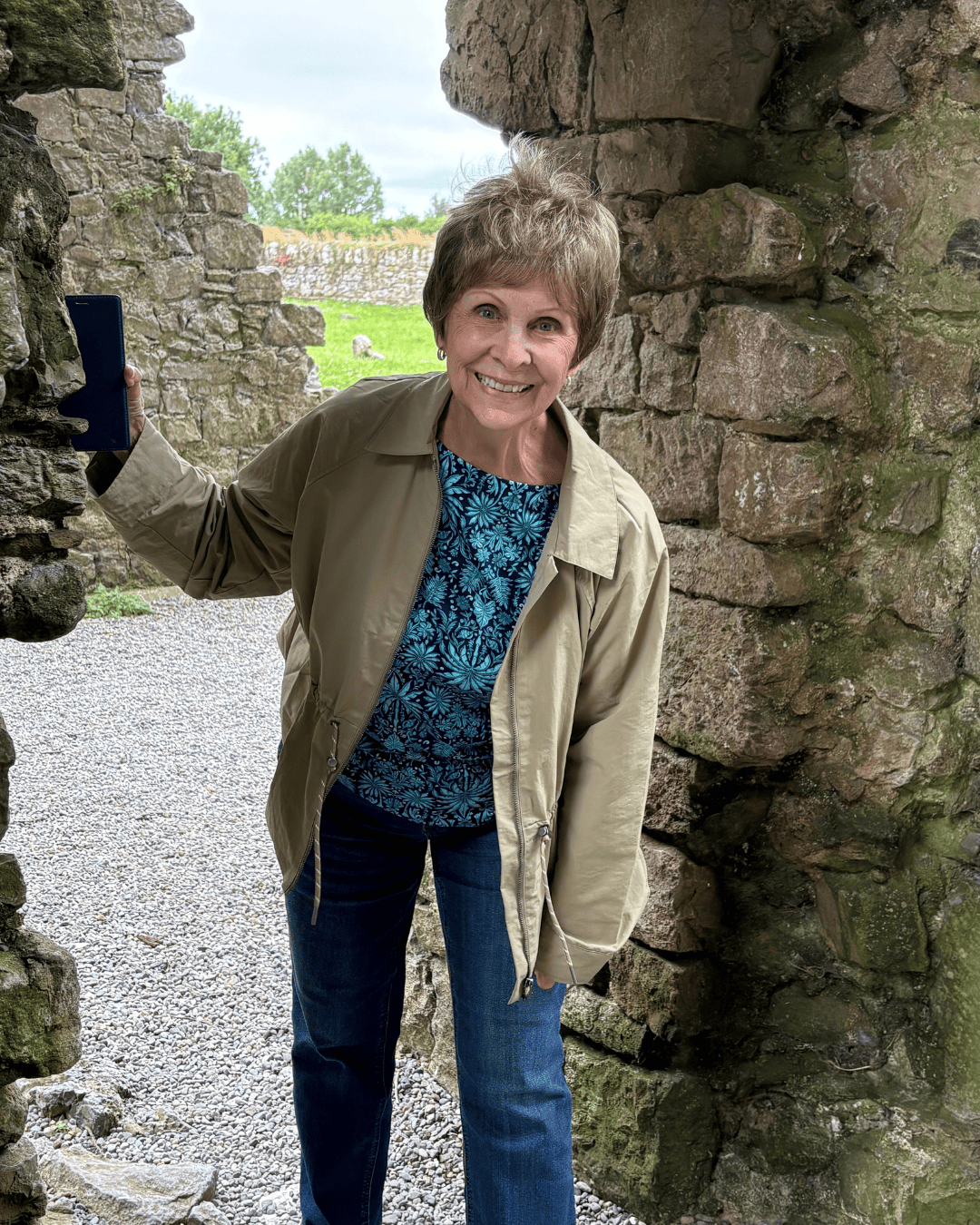
Ireland is beautiful, but it’s also full of cobblestones, hills, castle steps, grassy ruins, uneven paths and historic buildings that were constructed several centuries before anyone thought about elevators.
We traveled with my mother, who was 81 and had recently gotten her first passport, as well as my husband, who has limited mobility.
That made me look at places differently.
How close can we get by car?
Is there somewhere to sit? Where is a public restroom?
Does everyone need to walk the entire route?
Could we drop someone near the entrance before parking?
Can part of the group explore while someone else rests?
These little decisions can make the difference between someone feeling included and someone feeling like they’re holding everyone back.
And remember: accessibility varies enormously by location. Always check current information directly with an attraction or accommodation if someone in your group has specific accessibility requirements.
6. Don’t Underestimate the Rental Cars
If you’re gathering a big family in Ireland, transportation deserves serious thought.
Several smaller rental cars may give you more flexibility than trying to move everyone together.
One group can head back early, and nobody has to spend the entire trip waiting for 12 people to agree they’re ready to leave.
If you’re coming from the United States, remember that you’ll be driving on the left (check out my post 9 Things to Know Before Renting a Car in Ireland and get my FREE IRELAND DRIVING CHEAT SHEET) many Irish roads are narrower than American drivers expect, and automatic rental cars can be worth reserving well ahead of time if that’s what you’re comfortable driving.
And yes, roundabouts become much less terrifying after you’ve survived the first few.


7. Dining
Don’t treat meals as something you squeeze between attractions.
They may end up being some of the best parts of the vacation.
Rather than trying to keep a large family together all day, you can make dinner the anchor.
It’s so nice after a day of exploring when everyone meets again for dinner, trades stories and hears about what everyone else did.
If you have a large group, make reservations where possible. And don’t assume every restaurant can easily accommodate a big family without advance notice.
A long Irish dinner, or an evening at the pub, can be every bit as memorable as another attraction. I also would like to stress here that having a Hotel with a restaurant onsite is VERY helpful.
8. Leave Space for Family History
If Ireland was chosen because your family has Irish roots, don’t let genealogy become an afterthought. Ask relatives what they know before the trip.
County names. Townlands. Church names. Family surnames. Old photographs. Birth records. Stories that have been repeated for decades even if nobody is quite sure they’re accurate.
Our own family connection to Tipperary made traveling through that part of Ireland feel different.
There is something powerful about standing in a place where your Great Grandfather lived.
And if you’re lucky enough to have older relatives traveling with you, ask questions while you’re there.
Those conversations may become more valuable than anything you photograph.

9. Give the Kids Something That’s Theirs
An Ireland trip doesn’t need to become a week-long history lesson.
Castles are fantastic for kids because they can climb, explore and imagine.
But mix them with something completely different.
-Wildlife
-A visit to a Farm
-Beaches
-Pool day
-A ferry ride
-A funny search for a sleeping giant (see my full guide for what that’s all about-link below)
Create a day where they aren’t being asked to appreciate another medieval ruin.
In County Cork, something like Fota Wildlife Park can completely change the rhythm of a family itinerary. The adults may have traveled to Ireland for heritage and scenery, but the kids still need a vacation.
10. Take the Group Photo Early
I’m completely serious about this one.
Do not wait until the final morning when three people have early flights, someone can’t find their sweater, one family has already left and everyone looks exhausted.
Pick one beautiful location early in the trip, get everyone together, and take the picture.
Then take another one without everyone posing perfectly.
Those are probably the photographs you’ll treasure most.
The Best Family Trip Isn’t the Busiest One
It’s tempting to think that if your entire family has traveled all the way to Ireland, you need to make every minute count and check off a list of popular tourist sites.
I’d argue the opposite.
You’ve already done the hard part.
You’re all there.
Sit together.
Have the pint.
Let the cousins wander off together.
Let Grandpa tell the story you’ve already heard fourteen times.
Let someone skip the castle.
Stop because the view is beautiful.
Ireland doesn’t have to be something your family conquers.
It can simply be the place where everyone had time to be together.
Planning a Multigenerational Trip to Cork & Tipperary?
Traveling through Ireland with our own multigenerational family changed the way I think about itinerary planning.
That’s part of what inspired me to create Castles, Harbors & Irish Villages: A Relaxed Guide to Cork & Tipperary.
It includes 3–7 day itinerary options, driving and travel-time information, family-friendly ideas, practical mobility considerations, places to stay and eat, castles, harbor towns and plenty of room to slow down.
It’s designed for travelers who want to experience this part of Ireland without spending the entire vacation racing to the next stop.


